Front Teeth Dental Implants: Balancing Aesthetics and Biology for Lasting Results
The Architecture of a Smile: Beyond the Surface of Front Teeth Dental Implants
When you begin researching front teeth dental implants, your primary focus is likely on the mirror. Because these teeth are the focal point of every smile, every word spoken, and every first impression, the search is driven by a profound need for aesthetic normalcy. However, beneath the quest for a “perfect match” lies a hidden, heightened anxiety: the fear of a visible, permanent failure.
It is common to feel socially exposed and emotionally sensitive during this process. You aren’t just looking for a tooth; you are looking for a way to stop feeling self-conscious. Gently, it is important to realize that focusing solely on the “look” of the tooth can actually distract you from the very factors that ensure it remains natural-looking for years to come.
The Pressure of the “Cosmetic Shortcut”
The confusion surrounding front teeth dental implants exists because we are conditioned to view the front of the mouth as a gallery and the back of the mouth as a machine. When we feel the urgent need to “fix” our appearance, shortcuts become dangerously tempting:
-
The “Same-Day” Promise: Valuing speed above all else to end the social discomfort.
-
The Brand Proxy: Assuming a specific manufacturer name is a guarantee that the tooth won’t look “fake.”
-
The Lowest-Price Anchor: Trying to minimize the financial impact of a decision that feels forced upon you.
These shortcuts offer a temporary sense of control, but they often mask the psychological hesitation you feel: the fear that the result might look artificial, draw unwanted attention, or lead to lasting embarrassment if the gum tissue recedes or the color doesn’t age naturally.
Reframing the Front Tooth: Biology as the Foundation of Beauty
The belief that front teeth dental implants are primarily a cosmetic decision is a logical but incomplete mental model. Success doesn’t just depend on how natural the tooth looks the day it is placed; it depends on how the underlying structure supports the soft tissue (the gums) over the next decade.
To regain true confidence, it is helpful to replace the “cosmetic-only” mindset with a Bio-Aesthetic Model.
In this way of thinking, beauty is a byproduct of biological stability. The “invisible” factors are actually what protect you from a visible mistake:
-
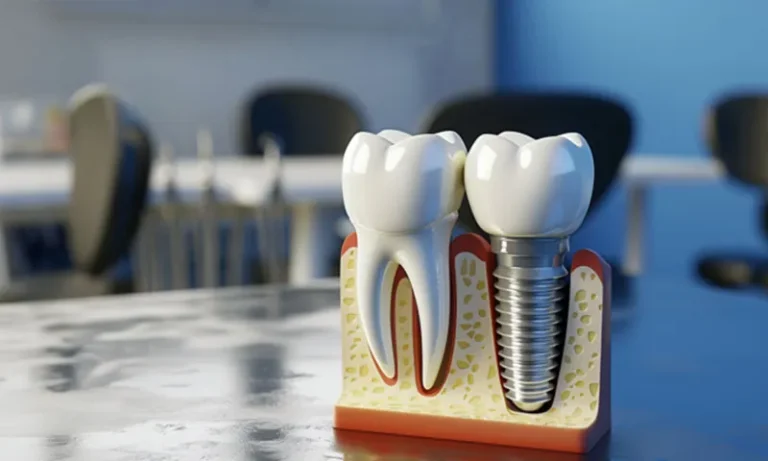
Bone Volume Maintenance: The thin bone in the front of the mouth is prone to “melting” after a tooth is lost. Without meticulous planning, the gum line will eventually sink, exposing the metal of the implant.
-
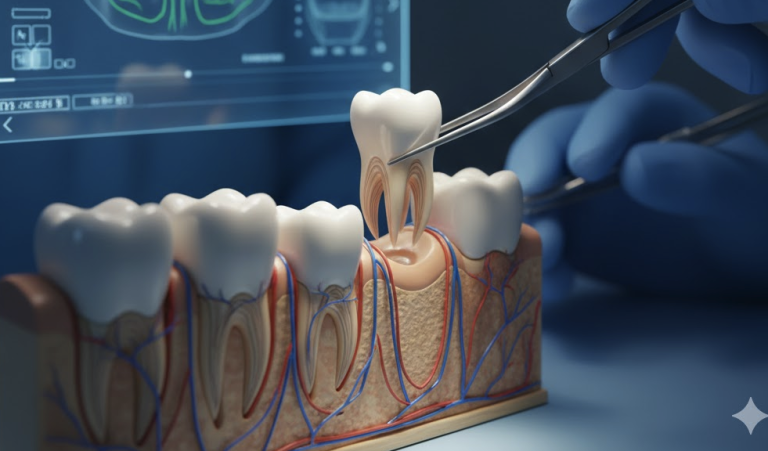
Soft Tissue Architecture: The “papilla” (the small triangle of gum between teeth) is notoriously difficult to recreate. Success depends on the millimetric placement of the implant to support this tissue.
-
Emergence Profile: A natural tooth doesn’t just sit on the gum; it emerges from it. The angle of the implant determines whether the crown looks like a natural extension of your body or an appliance glued into place.
Visual Harmony Checklist: Verifying the Digital Design

To ensure the final result is indistinguishable from your natural teeth, look for these three technical details during the digital smile design or wax-up phase of your planning.
-
Gingival Zenith Position: This is the highest point of the gum line around the tooth. For a front tooth to look natural, the zenith must be slightly off-center (toward the ear) and match the height of the tooth on the opposite side. If the plan shows a perfectly centered zenith, it may look symmetrical but “clinical.”
-
Incisal Translucency: Natural teeth are not one solid color; the edges are slightly translucent. Your restoration plan should detail how light passes through the edge of the tooth to mimic the “halo” effect of natural enamel.
-
Macro and Micro-Texture: Real teeth have subtle ridges and grooves that catch the light. A “fake” look often comes from a tooth being too smooth. Check if the plan accounts for surface texture that matches your neighboring teeth.
Decision Scenarios: Mapping Social and Physical Needs
-
The Recent Trauma Scenario: You lost a front tooth suddenly. What matters: Immediate social restoration. The worry: “If I rush, will it look ‘off’ for the rest of my life?”
-
The Long-Term Gap: You have been missing a tooth for years. What matters: Reclaiming a confident smile. The worry: “Is there even enough bone left to make it look natural?”
-
The Speech and Function Case: Your front tooth is failing, affecting your speech. What matters: Clarity of speech and biting function.
Context Comparison: Planning for Visible Predictability
| Factor | Standardized Approach | Comprehensive Bio-Aesthetic Planning |
| Decision Certainty | Relies on average healing | High; utilizes 3D imaging and tissue mapping |
| Long-term Predictability | Variable; higher risk of gum recession | High; designed to maintain bone and tissue levels |
| Planning Complexity | Routine clinical diagnostics | Virtual “Smile Design” and surgical guides |
| Risk if Assumptions Fail | Potential for visible metal or “long” teeth | Minimal; contingencies for bone/tissue loss |
| Flexibility Over Time | Limited by initial placement | High; custom components allow for future changes |
Restoring Control Through Research
The most important step in reducing the fear of a visible mistake is to remove the sense of urgency. While it feels like the world is looking at the gap, your long-term social confidence is better served by a measured, information-led process.
Normalize the research phase. It is perfectly appropriate to stay in the “not deciding” stage until you understand how a provider plans to manage your specific gum architecture. Professional help should be framed as clarification, not commitment. —
The Value of Clarity
Confidence grows when you stop worrying about the “tooth” and start understanding the “foundation.” When you recognize that front teeth dental implants are a balance of biology and art, the pressure to rush disappears. You move from a state of being socially exposed to a state of being biologically informed.
Reassurance and Decision Safety
Choosing to restore a front tooth is an act of self-care. The safety of your decision is found in the transparency of the planning process. Take your time to ask about bone volume, gum support, and 3D precision. When the path forward feels logically sound and respects the subtle complexities of your anatomy, you can move forward with the peace of mind that comes from knowing your smile is built to last.